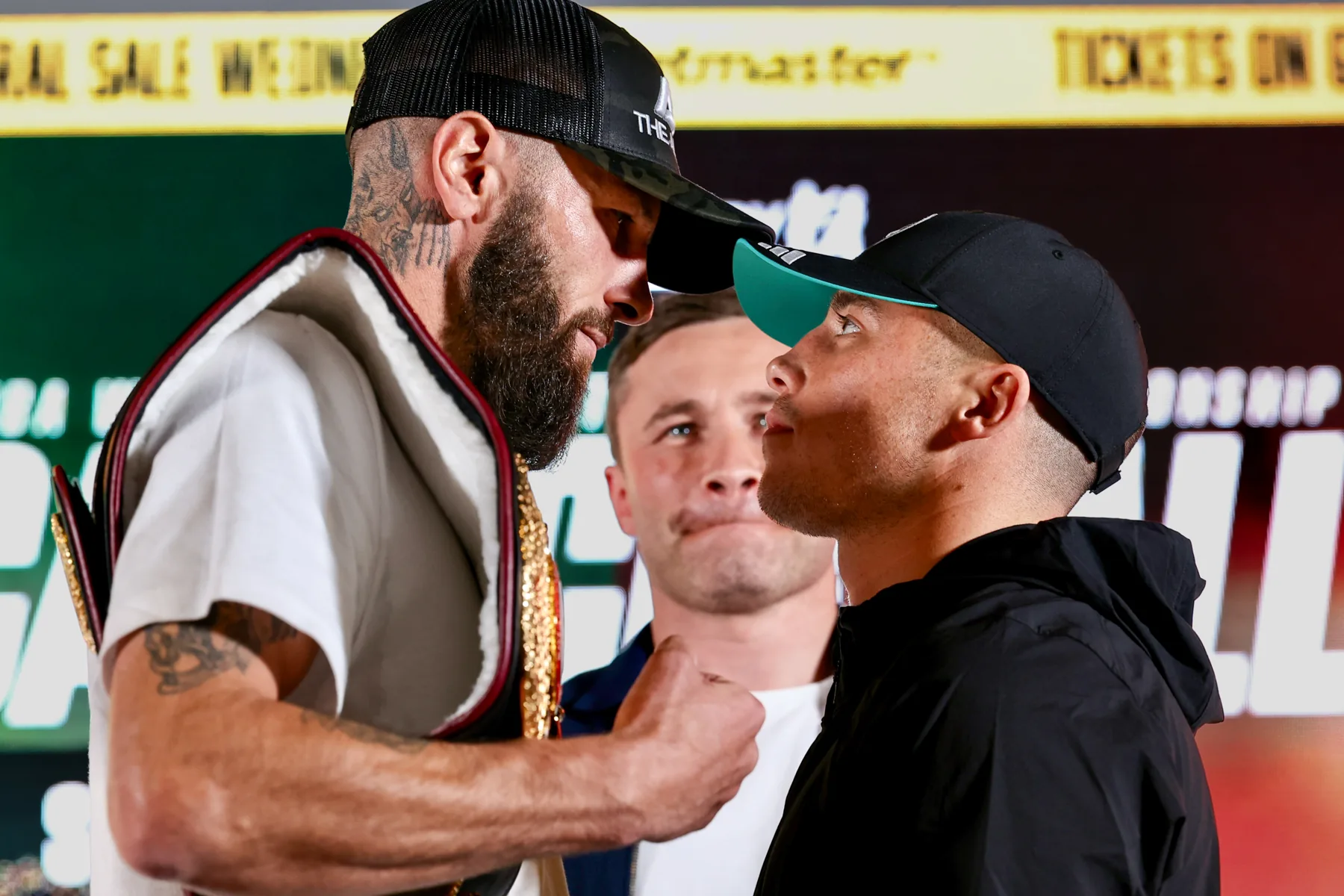
There are fights in which the attraction lies in the championship belt, and others in which the circumstances surrounding the two men make the contest particularly compelling. Anthony Cacace against Nick Ball has elements of both.
On Saturday 19 December, Cacace will return to his home city of Belfast to defend the WBA super-featherweight world championship against Liverpool's Nick Ball, a former world champion seeking to reclaim his place at the top of the sport.
The contest, promoted by Queensberry and scheduled for The O2 Belfast, was presented at a launch press conference on Friday 9 October. It brings together two accomplished fighters whose careers have taken very different routes to the same stage.
For Cacace, it is an opportunity to defend a world title in front of his own people. For Ball, it is the chance to become a world champion in a second weight division after suffering the first defeat of his professional career earlier this year.
Neither man arrives without something to prove.
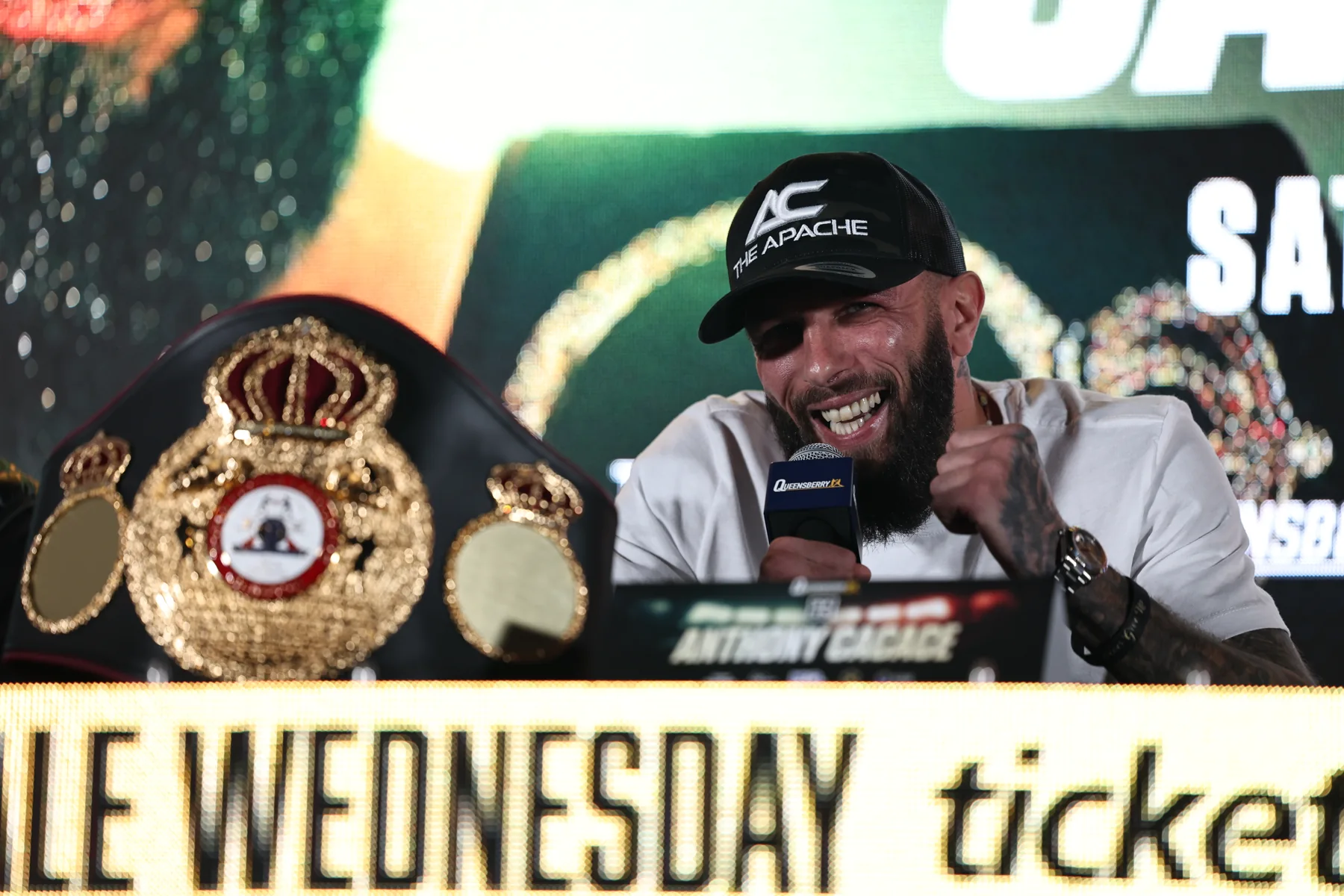
Anthony Cacace: a champion returning home
At 37, Anthony Cacace has reached a stage of his career that once seemed a long way off. The Belfast fighter spent years working his way through British and European boxing before finally receiving the opportunity to establish himself at world level. His breakthrough came in May 2024, when he defeated the previously unbeaten Joe Cordina in Riyadh, forcing an eighth-round stoppage to claim the IBF super-featherweight championship. It was a significant achievement for a fighter who had already endured a long and often frustrating journey through the professional ranks.
Cacace subsequently defeated former world champions Josh Warrington and Leigh Wood, before claiming the WBA championship with a unanimous decision victory over Jazza Dickens in Dublin in March 2026. Those results transformed his standing. No longer a fighter waiting for his opportunity, Cacace enters December as the established champion, with a record of 25 victories and one defeat.
Yet there is a distinction between winning a world championship and defending one in your home city. For a Belfast fighter, the opportunity carries its own significance. The city's boxing heritage is considerable, its supporters knowledgeable, and its expectations rarely modest. Cacace will have the advantage of familiarity, local support and experience at super-featherweight. He will also carry the responsibility that comes with being the hometown champion.
Nick Ball: a new weight, another opportunity
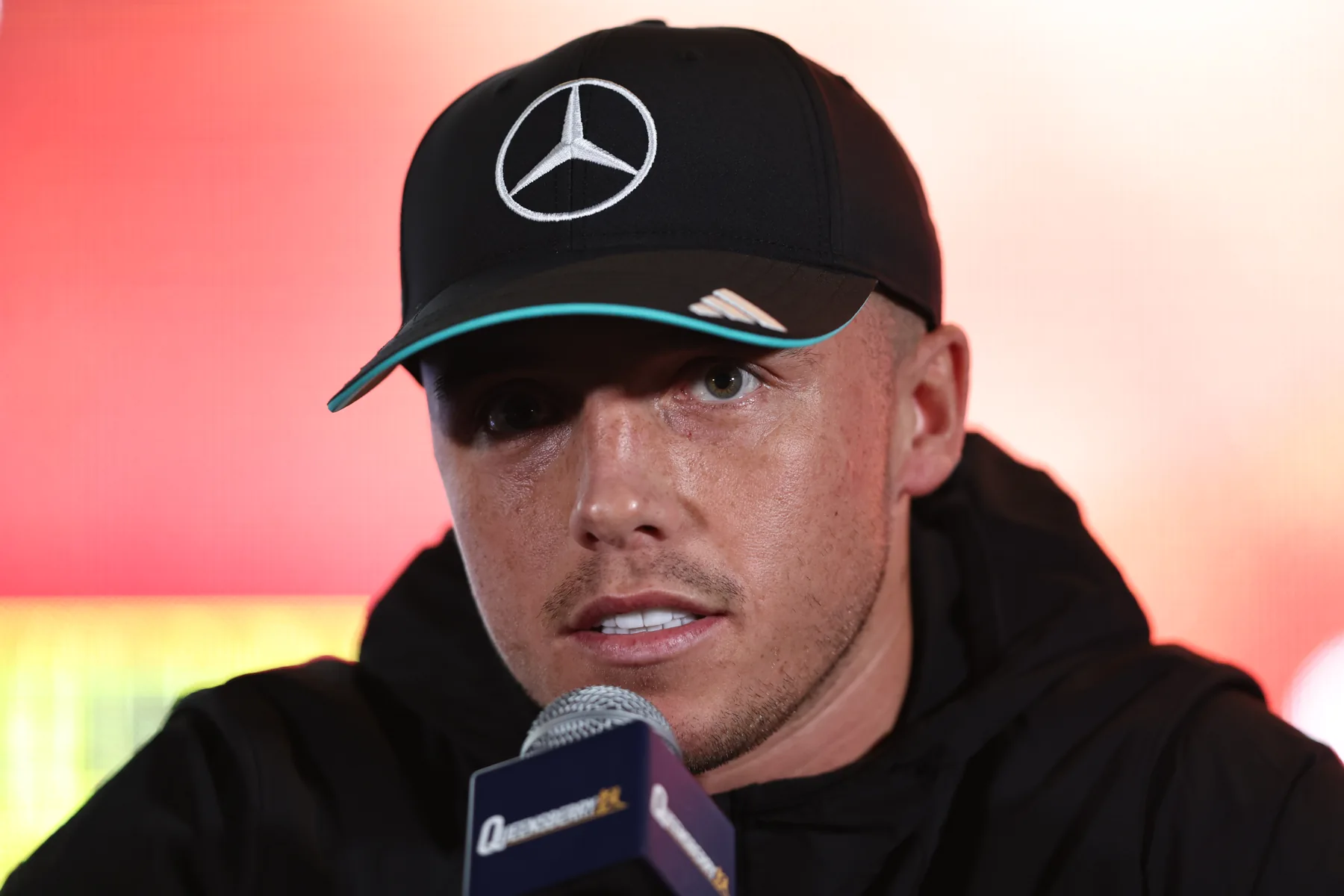
Nick Ball's route to Belfast has been rather different. The Liverpool fighter established himself among the leading featherweights through an aggressive, relentless style that made him difficult to discourage and even harder to contain. His rise included victories over Raymond Ford, Isaac Dogboe and Sam Goodman, alongside a controversial draw with Rey Vargas.
By early 2026, Ball had built a reputation as one of Britain's most determined world champions. Then came Brandon Figueroa. Their February meeting in Liverpool ended with Ball stopped in the twelfth round, bringing his reign as WBA featherweight champion to an end. It was his first professional defeat.
Boxing careers are rarely defined solely by victories, however. The response to defeat can be just as revealing. Rather than pursuing an immediate return to the featherweight championship picture, Ball has chosen to move up to super-featherweight, where he will challenge Cacace at 130 pounds.
The decision presents both an opportunity and a considerable test. Cacace is an established super-featherweight with a substantial height advantage and the experience to use his range. The central question is whether Ball can impose the same pressure, pace and physical intensity against a naturally bigger opponent. If he can, the fight could become extremely uncomfortable for the champion. If Cacace can control the distance and prevent Ball from settling into his rhythm, the challenger may find the move up in weight a difficult one. It is precisely that uncertainty which makes the contest attractive.
A contrast of styles
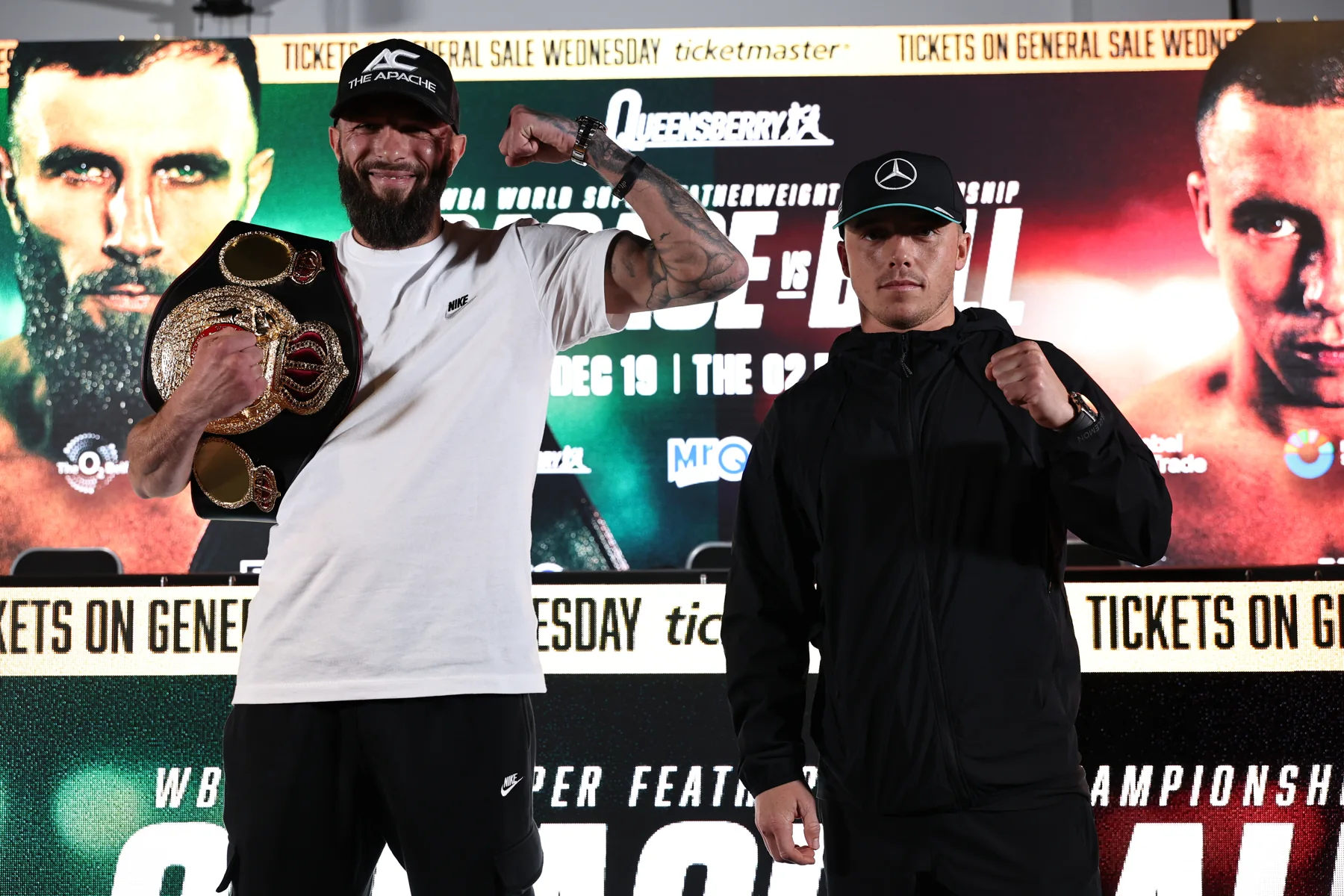
The physical differences between the two men are striking. Cacace, a tall southpaw for the division, is comfortable working at range, varying his attacks and making opponents negotiate the distance before they can establish their own offence. Ball is considerably shorter, but his compact frame, willingness to close distance and sustained aggression have been central to his success.
Neither fighter is easily categorised. Cacace has demonstrated that he can stand his ground and fight when required, while Ball is more than simply an aggressive front-foot boxer. His success against accomplished opposition has demanded timing, judgement and the ability to adapt.
The contest may ultimately be decided by which man can impose his preferred distance. For Ball, that means finding a way inside without repeatedly paying a price on the way in. For Cacace, it means preventing the challenger from turning the contest into a sustained battle at close quarters. The champion has the physical advantages. The challenger has the opportunity to test how effectively those advantages can be maintained under pressure. Neither guarantees victory.
Crocker and Cooper: another fight with something at stake
The supporting programme will also feature an intriguing welterweight contest between Belfast's Lewis Crocker and Worcestershire's Owen Cooper. Crocker returns following the loss of his IBF world championship to Liam Paro, a setback that interrupted his progress at the highest level. Like Ball, he now faces the task of responding to defeat.
Fighting in Belfast provides Crocker with familiar surroundings and strong local support, but those advantages come with expectations. A former world champion is rarely judged by victory alone when attempting to rebuild.
Owen Cooper, meanwhile, has an opportunity to change the direction of his own career. The Worcestershire fighter has experienced the demands of British-level competition, including victories over Eithan James and Chris Kongo, alongside defeats to Ekow Essuman and Constantin Ursu. Those results demonstrate both his ability and the challenges he has encountered when stepping up against accomplished opponents.
Facing Crocker represents another significant examination, but it also offers the prospect of the biggest victory of his career. It would be a mistake to regard Cooper as simply an opponent selected to facilitate somebody else's return. He has his own ambitions, his own professional record and every reason to approach the contest as an opportunity rather than an obligation. That is what makes the supporting fight worth following in its own right.
More than a December championship night
The complete supporting programme remains to be announced, but the two confirmed contests already offer an interesting combination of established names, recent setbacks and unfinished ambitions.
For Cacace, December represents the chance to strengthen his position as world champion and enjoy the kind of homecoming that has eluded many accomplished fighters. For Ball, it is an opportunity to demonstrate that one defeat has not altered his prospects at world level. For Crocker, the evening offers a route back towards the position he recently occupied. For Cooper, it is an opportunity to upset expectations and establish himself beyond the domestic level.
All four arrive with different motivations, and none can afford to regard the occasion as routine. The launch press conference has introduced the contest to the public. The weeks ahead will bring further announcements, preparations and predictions. Ultimately, those will give way to the only evidence that settles matters in boxing: what happens between the opening and closing bells. On 19 December, Belfast will have its opportunity to find out.
Independent news analysis based on publicly confirmed fight announcements. Press-conference photography supplied by Queensberry Promotions for editorial use. MBB did not attend the launch press conference.
Background verification: Queensberry events · RTÉ Sport / WBA ruling