Mickey Hayes: A Fighting Life Beyond the Record Books
The Irish boy who found his place among Britain's travelling boxing booths, the men who shared thousands of rounds with him, and the grandson helping to preserve their stories.
There are some conversations that become more valuable with the passing of time. Not necessarily because anything remarkable was said at the time, but because the person who could tell the story is no longer there to tell it again.
Richie Hughes remembers talking boxing with his grandfather, Mickey Hayes, while Mickey was in hospital towards the end of his life. They were discussing the first three men he had fought on the travelling boxing booths, more than seventy years earlier.
Mickey could still remember their names: Peter Davis, Jackie Baker and Billy Barrett.
It is a small detail in a life that contained an extraordinary amount of boxing, but I find it rather revealing. Of all the thousands of contests Mickey was believed to have fought, those first three opponents had remained with him. He remembered the men, not simply the occasions.
And there were an awful lot of men to remember.
The University of Sheffield's National Fairground and Circus Archive records that Michael 'Mickey' Hayes fought approximately 4,500 contests during more than twenty years on Britain's travelling boxing booths. At one stage he reportedly fought fifteen times in a single day, while two of his regular opponents, Joe Somerville and Sid Cain, faced him more than 500 times each.
Those figures are difficult to comprehend when viewed through the lens of modern professional boxing. A fighter completing fifty contests today would generally be regarded as having enjoyed a substantial career.
Mickey's experiences belonged to a rather different world.
It was one in which men might fight several times in an evening, return to work the following morning and meet the same opponents again when the fair came back to town. Some were licensed professionals, others experienced booth fighters, and occasionally a member of the public would discover that the man standing opposite him was considerably more accomplished than he had anticipated.
Yet the numbers, remarkable though they are, tell only part of Mickey's story.
For that, we have to turn to the people who knew him.
From County Kerry to West London
Mickey's family came from Tralee, County Kerry, in the southwest of Ireland. His parents, Tim and Molly Hayes, brought their family to England around the late 1930s or early 1940s, settling in the western outskirts of London.
Mickey was the eldest of four children, two boys and two girls.
His grandson Richie remembers being told that Mickey regularly found himself involved in fights as a youngster. He was the only Irish child in his immediate area, and being different was sometimes enough to make him a target.
There is a wider history behind that experience.
Irish families had been settling in Britain for generations, often drawn by employment and the possibility of a more secure future. Their contribution to British life was substantial, although acceptance was not always immediate or unconditional.
For a young Irish boy growing up around West London in the years surrounding the Second World War, the ability to look after himself could have a very practical value.
Mickey took up boxing for precisely that reason.
Richie recalls him training at a gym known as Wimpy's, near Heathrow, where Irish fighters gathered, and at Staines Boxing Club.
Whatever ambitions Mickey may initially have had, boxing soon became something considerably more important than a means of defending himself.
It introduced him to people and places that would remain part of his life for decades.
And in 1950, aged seventeen, he encountered the travelling boxing booths.
Three Nights and a New Life
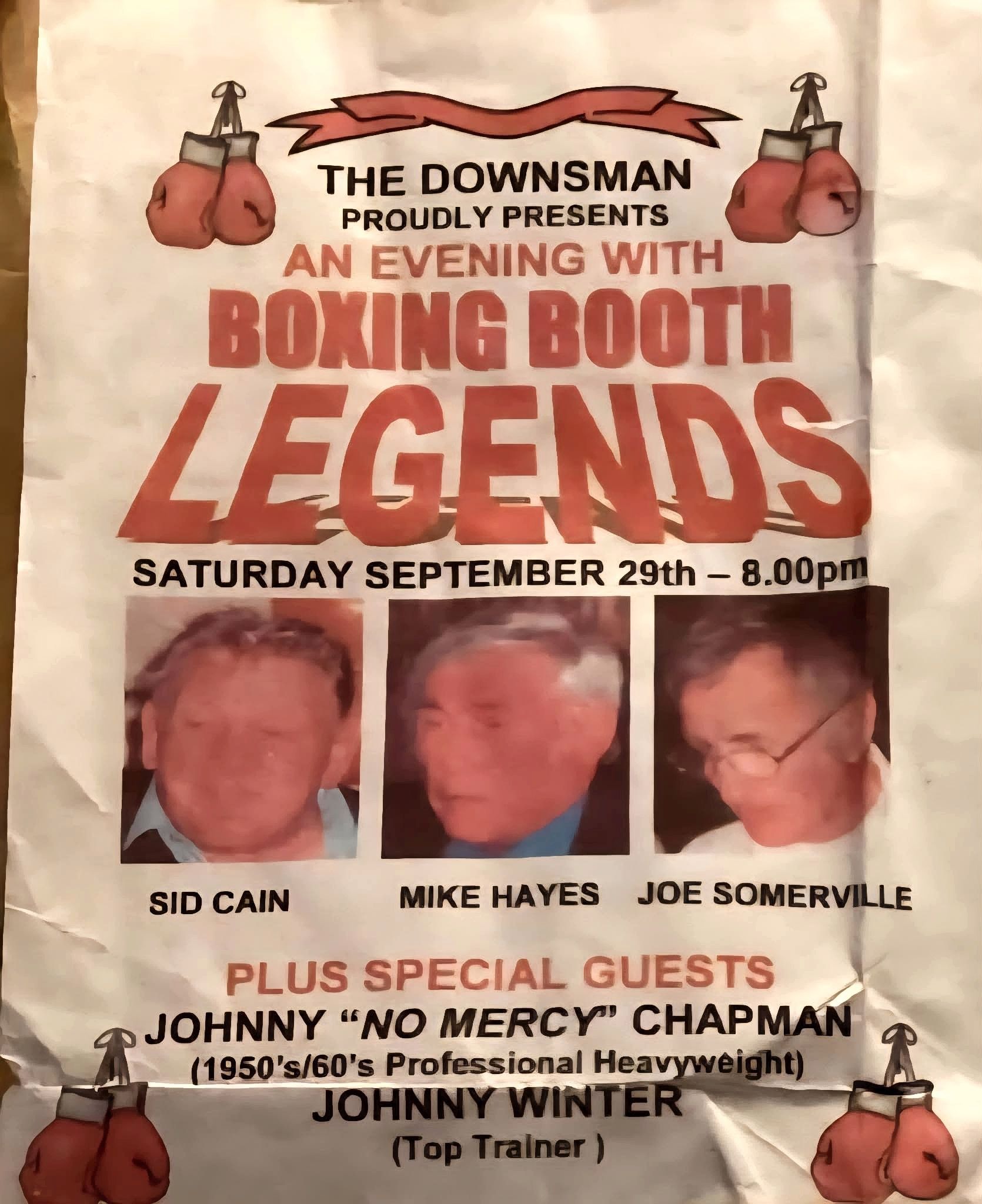
The story of Mickey's introduction to booth boxing is one of the memories Richie has worked particularly hard to preserve.
In Staines, aged seventeen, Mickey went along to a fairground booth on a Wednesday evening and accepted a challenge from Peter Davis of Slough. He won, and returned the following night to face Jackie Baker, whom Richie believes came from Fulham.
He won again.
On Friday he returned for a third contest, this time against Billy Barrett of Uxbridge.
Three nights, three opponents and three victories. After that third win, Mickey was invited to join the booth.
It was a straightforward beginning to what became a remarkable fighting career.
Richie has since identified all three men: Peter Davis, Jackie Baker and Billy Barrett. They were the opponents grandfather and grandson were still discussing in hospital more than seventy years later.
I particularly like that part of the story.
Mickey's later career would bring him into contact with experienced professionals and men who had fought for recognised honours. Yet the three opponents who first encouraged him towards the booths had retained their place in his memory.
The invitation also arrived at an interesting moment in British boxing history.
Fairground boxing had been part of travelling entertainment for centuries. The National Fairground and Circus Archive traces the tradition through the nineteenth and twentieth centuries, when booths provided both entertainment for the public and valuable experience for aspiring fighters.
Among those associated with the booths were men whose names became familiar far beyond the fairground, including Jimmy Wilde, Tommy Farr and Randolph Turpin.
The booths were not merely a curiosity on the edge of organised boxing. For generations, they had formed part of the sport's development.
By the time Mickey joined them, however, that relationship was changing.
In 1947, the British Boxing Board of Control had placed fairground boxing out of bounds for its licensed members. The restriction contributed to the gradual separation of the travelling booths from the regulated professional game.
Mickey's career therefore began during a period when a long-established boxing tradition was already moving towards its final decades.
He was entering a world with a substantial history, although I doubt that was foremost in the mind of a seventeen-year-old who had just won three fights and been offered the opportunity to earn money doing something he enjoyed.
The Men Behind the Canvas
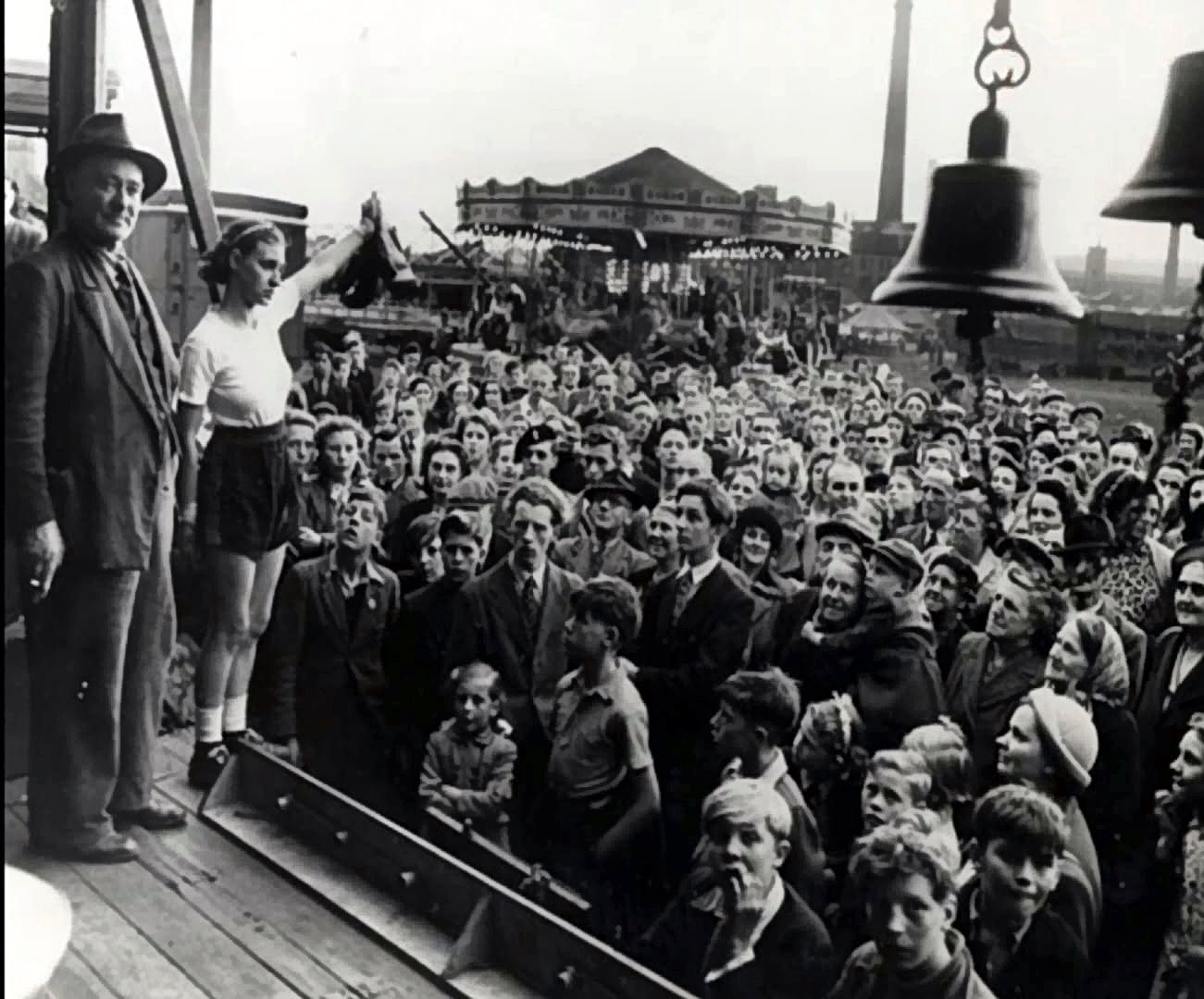
To understand Mickey's career, it helps to understand what a boxing booth actually was.
The fairground boxing show combined sport, entertainment and business. A proprietor needed to attract a paying audience, and the fighters were expected to provide contests that justified the admission charge.
That required boxing ability, certainly, but it also demanded a particular understanding of people.
The showman had to persuade spectators to enter the booth. The fighters had to make the contests entertaining. And occasionally somebody from the crowd had to be encouraged to step forward and try his luck.
Richie's recollections provide a useful insight into how that worked.
He describes two forms of contest familiar to the fighters: straights and gees.
A straight was a genuine contest, often involving a challenger from the audience. A gee was more theatrical, with experienced fighters sometimes agreeing to provide an exhibition designed to entertain the crowd.
The distinction was not always as clear as it might sound.
Two men who knew one another could begin by putting on a show, only for a punch to land rather harder than intended. Pride, temperament and the natural competitiveness of fighters could quickly change the nature of the contest.
There was another side to the booths that Mickey remembered with particular warmth. Some youngsters stepped forward not because they believed they could beat an experienced fighter, but because they desperately wanted the pound they might earn. They put up a real fight for it.
Richie remembers his grandfather explaining that he would sometimes carry these young challengers through a contest rather than simply overwhelming them. Mickey admired the courage it took to climb into the ring against a seasoned fairground boxer for the chance to earn that money.
That detail is worth remembering alongside the thousands of contests. It tells us something about the way Mickey regarded the people who stood opposite him.
Mickey knew both sides of that arrangement.
The Sheffield archive records that he sometimes deliberately went down during exhibitions to create excitement among the spectators. It was part of the showmanship expected of an experienced booth fighter.
But the ability to entertain an audience should not be confused with an inability to fight.
These were men who spent enormous amounts of time in the ring, often against experienced opposition.
Some were very capable boxers indeed.
Richie also remembers Mickey explaining how a fighter might stand among the spectators, apparently just another member of the crowd.
When the proprietor called for a challenger, he would volunteer.
A name and hometown would be announced, the audience would be encouraged to support him, and a contest would follow.
The arrangement could make the prospect of challenging a booth boxer seem rather more inviting.
Joe Somerville, one of Mickey's closest friends, apparently enjoyed inventing ridiculous names for these occasions.
It was the sort of humour that became part of Mickey's memories of the booths, and it helps explain why he continued talking about those years long after his fighting career had ended.
A Working Man's Boxing
There was another important aspect of booth fighting that can easily be overlooked.
For many of the men involved, boxing was not their only occupation.
Richie remembers Mickey explaining that some fighters travelled extensively with the fairs, while others joined the booths when they returned to their local area.
Mickey himself worked with different proprietors, including Alfie Weston and Mickey Kiely, rather than remaining permanently attached to a single travelling show.
The arrangement allowed men to combine boxing with ordinary employment.
Joe Somerville, despite his considerable experience as a professional fighter, also worked in a wood mill.
He could spend the day earning his living and then box in the evening.
Richie recalls Mickey describing payments of around a pound for a three-round contest and two pounds for six rounds. But the agreed purse was not necessarily where a fighter earned most of his money.
There was also the practice known as collecting the nobbins.
After a particularly entertaining contest, money would be collected from spectators who had enjoyed the performance. On a good occasion, those contributions could amount to considerably more than the fighter's original purse.
It was another reason why the ability to entertain mattered almost as much as the ability to fight. A boxer who gave the audience a contest worth remembering might earn considerably more than one who simply did enough to win.
For working men supporting families, that additional income could make a meaningful difference. The booths offered an opportunity to earn money from skills they had developed over many years, although the rewards depended as much on the crowd as they did on the contest itself.
There was also the appeal of the sport itself.
Not every man who fought on the booths was pursuing a championship. Some enjoyed the competition, the company and the opportunity to use skills they had spent years developing.
The fairground provided a place where those different motivations could exist together.
It also offered an education that would have been difficult to reproduce in an ordinary boxing gym.
A man might face several opponents in a single evening, each with different strengths and weaknesses. He learned to judge distance, conserve energy and recognise danger quickly.
The rings themselves were often small.
Mickey remembered some measuring only ten or twelve feet across, leaving little room for a fighter to move away from trouble.
In those conditions, experience counted for a great deal.
Joe Somerville and the Friendships That Lasted
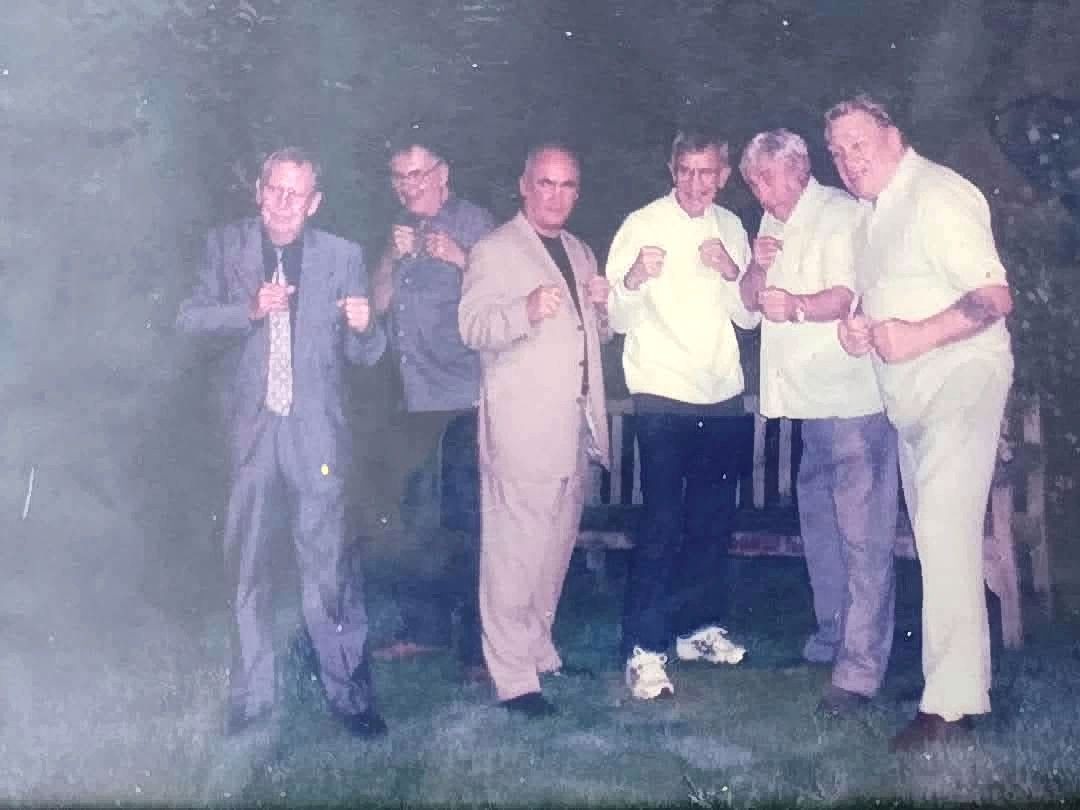
Of all the men Mickey encountered, Joe Somerville appears to have occupied a particularly important place in his life.
The Sheffield archive records more than 500 meetings between them.
It is a remarkable number, although perhaps the more interesting detail is that they remained close friends.
Boxing has always produced relationships that can seem unusual to those outside the sport.
Two men may spend years trying to defeat one another, sometimes inflicting considerable punishment, yet develop a mutual respect that lasts long after they have stopped fighting.
For Mickey and Joe, that relationship was repeated hundreds of times.
They understood one another's abilities, habits and personalities. They also shared the experience of a life that few people outside the travelling boxing community could fully appreciate.
One of Mickey's favourite stories involved a contest between the two men in Corby.
The Northamptonshire town had developed a substantial Scottish community through its steel industry, and on this occasion the audience apparently decided that Mickey and Joe were not fighting with sufficient enthusiasm.
The spectators began shouting their dissatisfaction.
Joe, never one to miss an opportunity for a joke, removed one of his boots and placed it down the front of his trunks.
Mickey demanded to know what he was doing.
Joe's response was a joke at the expense of the complaining crowd.
It was a story Mickey found endlessly amusing, and one he continued telling for years.
I suspect the amusement had as much to do with remembering Joe as it did with the incident itself.
We all have stories like that about people we have known. An ordinary remark or a moment of foolishness becomes inseparable from the person who made it.
For Mickey, those memories were part of what made his boxing years so enjoyable.
Somerville was not his only familiar opponent.
Sid Cain also appears prominently in the archive's account of Mickey's career, with the two men reportedly meeting on more than 500 occasions.
Between them, Somerville and Cain accounted for an extraordinary number of Mickey's contests.
That tells us something about the way the booths operated.
The same experienced fighters could meet repeatedly, sometimes in genuine competition and sometimes in exhibitions, developing an understanding of one another that would have been impossible through occasional encounters.
The relationships were an essential part of the business.
They were also an essential part of the fighters' lives.
The Men Who Could Really Fight
When Richie asked Mickey who had hit him hardest, his grandfather answered immediately.
Billy Dean.
Not one of the famous champions whose names dominate boxing histories, but a man Mickey had encountered during his years on the booths.
Richie remembers being told that they fought three times in a single day.
After their second contest, Dean asked Mickey whether he would mind if they pulled their punches a little in the third.
“No, Billy, no I don't mind at all,” Mickey replied.
As Mickey later explained, Billy hit so hard that he was relieved Dean had suggested it first.
I rather like that detail. There is no attempt to make Mickey appear fearless or invulnerable. He knew exactly how hard Billy Dean could punch, and he was perfectly happy to accept a slightly easier third encounter.
It challenges the way we sometimes judge fighters almost entirely through their official records.
There are men whose professional statistics suggest an ordinary career, yet whose abilities were respected by those who shared a ring with them.
The booths were full of such characters.
Some had professional experience. Others developed their skills through repeated fairground contests. A few moved between the two worlds, building reputations that were not always reflected in the surviving records.
Mickey also spoke highly of a fighter Richie remembers as Bertie Hyland, whose style was particularly effective in the small rings used by the booths.
What mattered to Mickey was not simply a man's reputation, but what he could do when the bell rang.
That is an important distinction.
Boxing history naturally concentrates on champions, title fights and the contests that attracted the largest audiences. Those achievements deserve their place.
But there was another level of boxing beneath them, populated by men whose abilities were recognised primarily by their fellow fighters.
The absence of a championship belt does not mean the absence of ability.
Mickey Hayes understood that better than most.
The Price of Experience
There was, of course, a cost to fighting so frequently.
Richie remembers Mickey talking about broken jaws, damaged hands, broken noses and men being carried away after contests.
The combination of small rings, frequent bouts and experienced opponents made booth boxing physically demanding.
Mickey considered fitness essential.
A fighter who became tired after one contest would struggle if he was expected to return to the ring several more times before the evening ended.
He also understood the importance of body punching.
Richie remembers his grandfather repeatedly advising him to practise punches to the body, advice shaped by Mickey's own experiences.
Mickey said he had never been stopped by a punch to the head, although he had been stopped by body shots.
He remembered suffering a split lip and a cut around the eye, but considered himself fortunate compared with some of the men he had seen injured.
One story involved a six-round contest against a travelling fighter in Maidenhead.
By the third round, Mickey could see that his opponent was beginning to tire.
As they came out for the fourth, Mickey offered to shake hands.
The other fighter pointed out that there were still rounds remaining.
Mickey replied that, as far as he was concerned, the fight was about to finish.
He then stopped his opponent.
It is another of those stories that Richie remembers with affection, and it reveals something of Mickey's confidence.
He had spent years learning to recognise when an opponent was struggling.
In a small ring, with little room to escape, that knowledge could be decisive.
The Grandfather Richie Came to Know
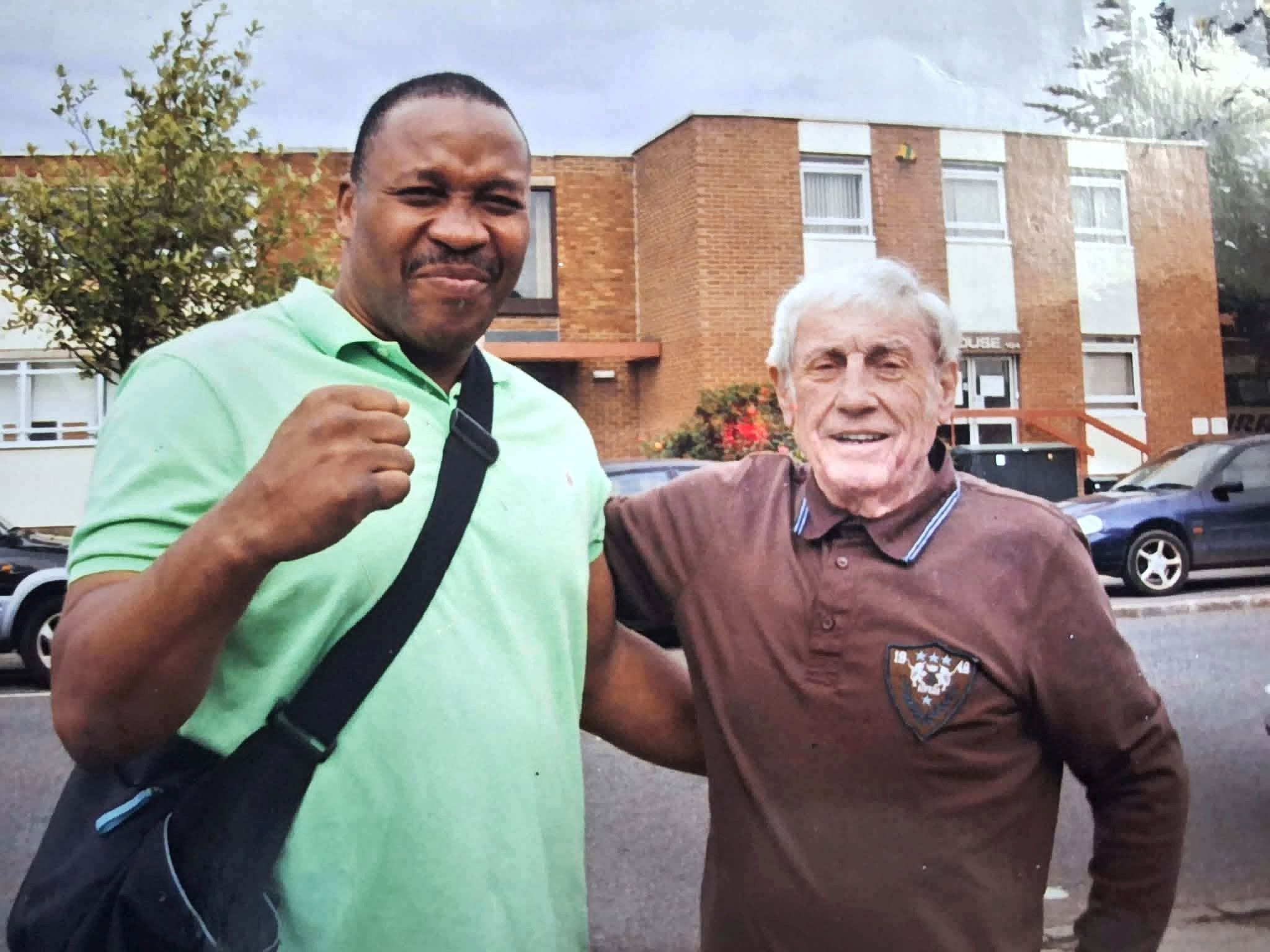
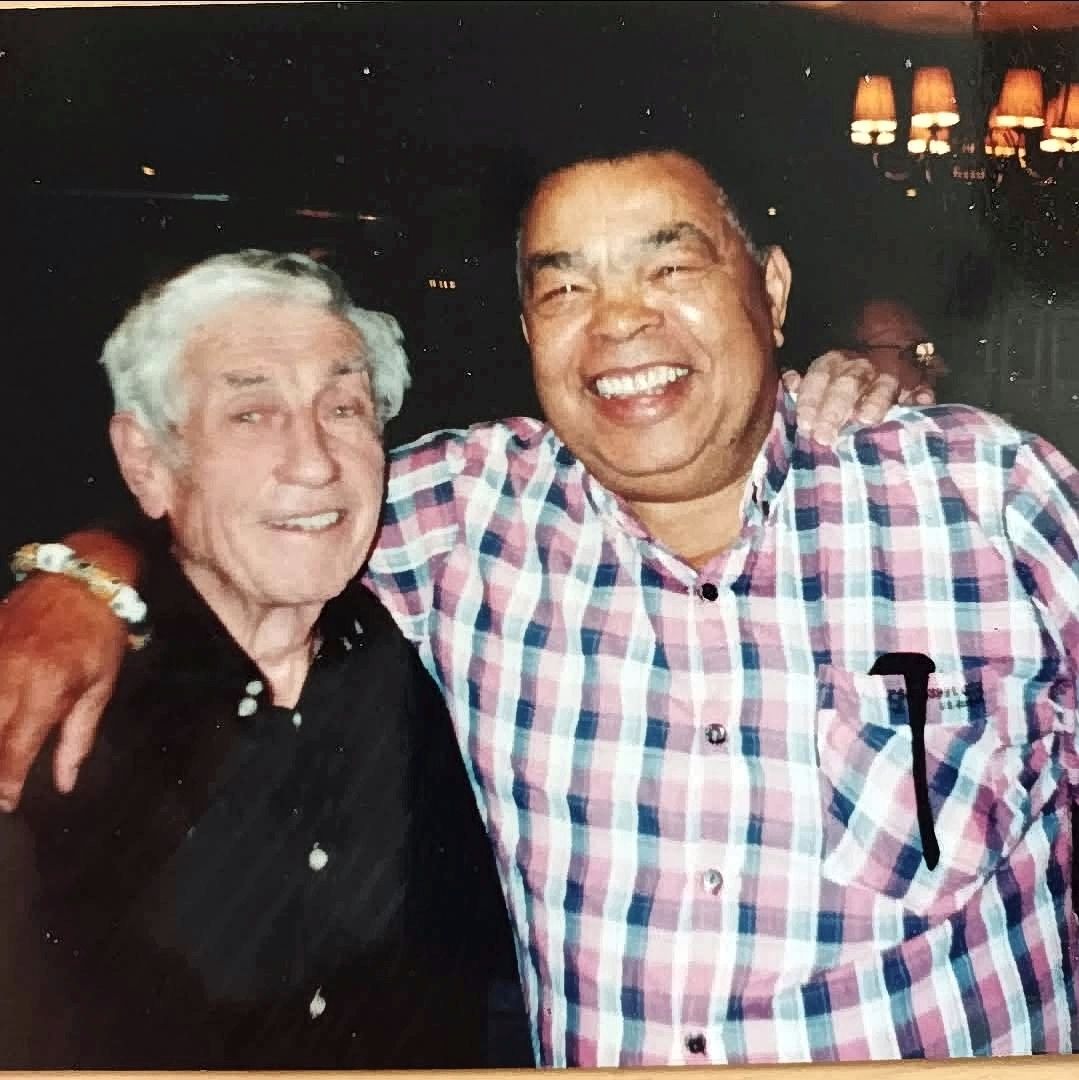
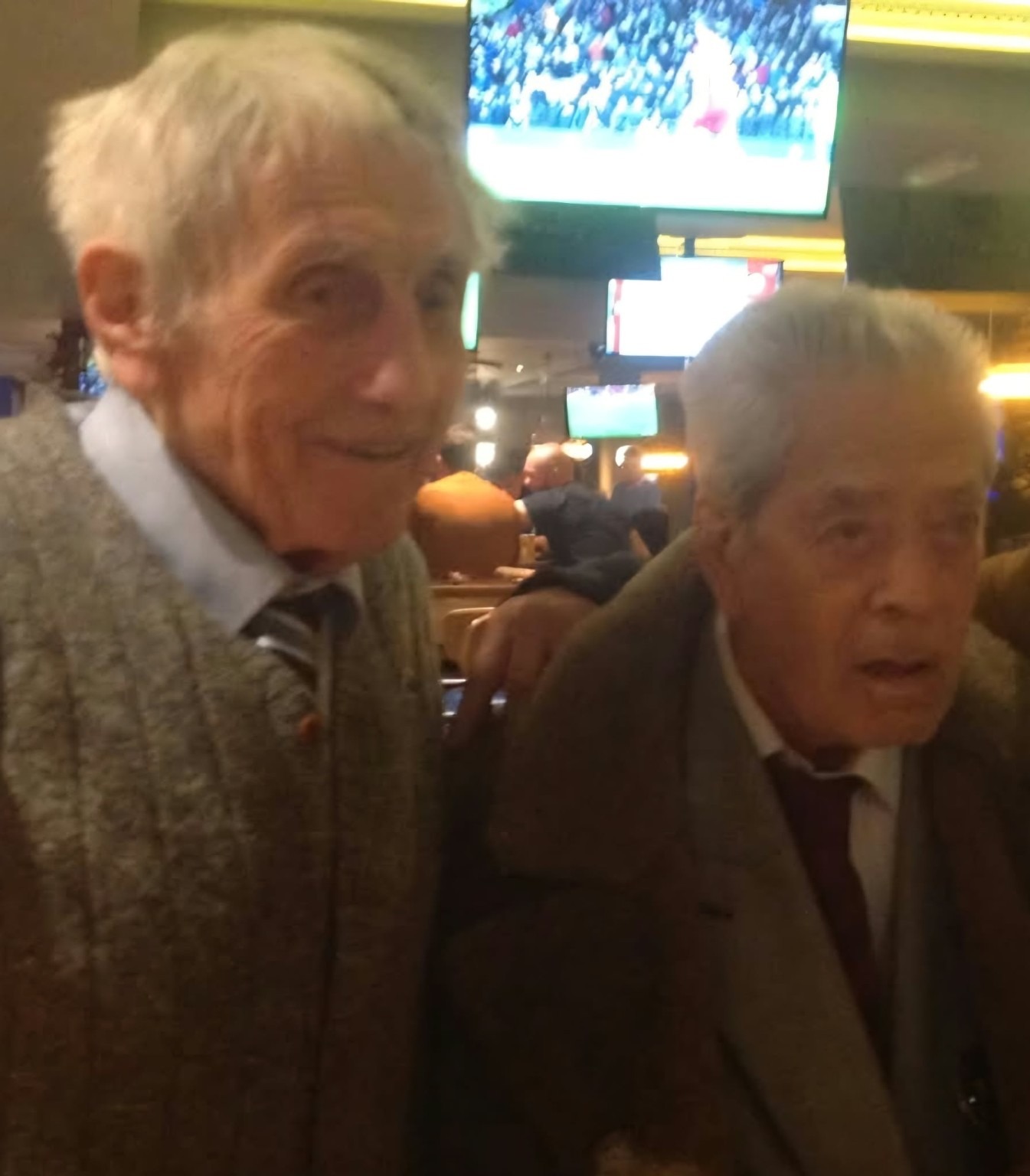
There is a personal dimension to Mickey's story that I think deserves as much attention as his fighting career.
Mickey was Richie's maternal grandfather, but he was not the grandfather Richie had known throughout his childhood.
Mickey and Richie's grandmother separated when they were young. She subsequently married Tom, who raised Richie's mother.
As a result, Richie only came to know Mickey properly later in life.
I find that an important part of the story because it helps explain the nature of the memories Richie has preserved.
He was not simply recalling a grandfather who had always been present at family gatherings.
He was getting to know a man whose life had taken a very different course, and discovering a remarkable collection of stories along the way.
Mickey's enthusiasm for boxing made that process rather easier.
According to Richie, he never stopped talking about the sport.
One of his favourite places was the London Ex-Boxers Association, where he could spend time with men who shared his experiences and understood the names and incidents he remembered.
Those friendships continued into his later years.
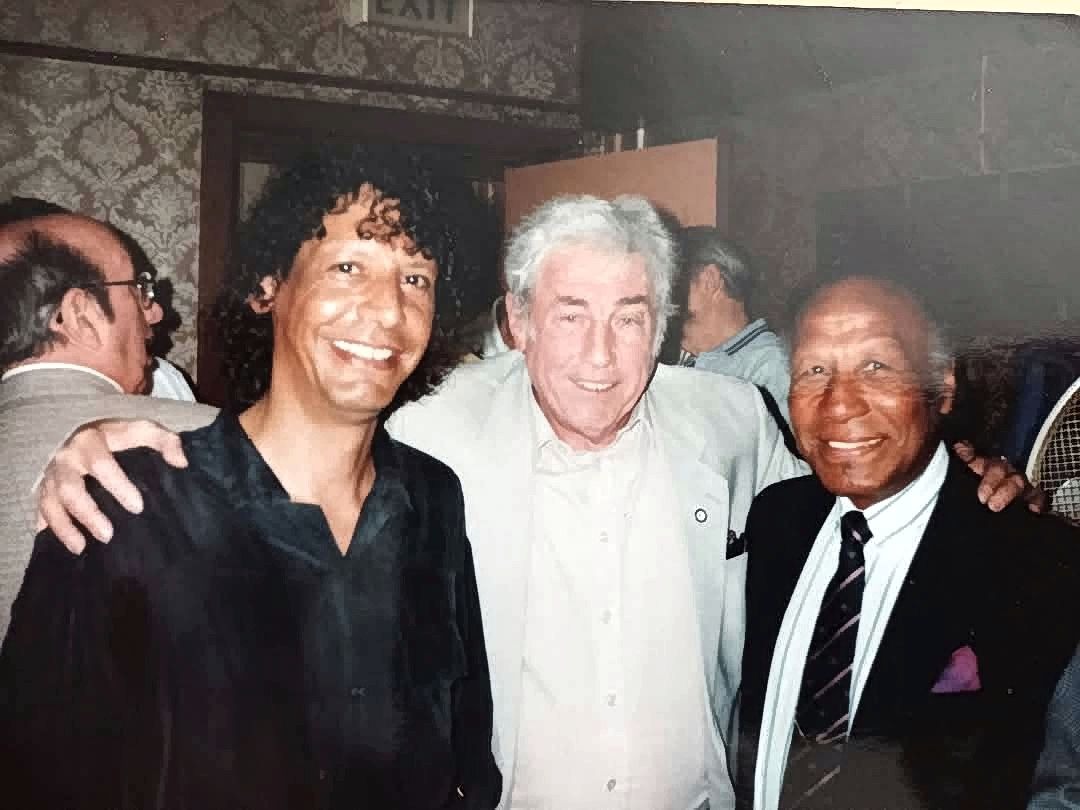
One of them was Bernie Khan, a friend from the London Ex-Boxers Association. A photograph preserved by Richie shows the two elderly men together. Their friendship lasted until the end of their lives; both died not long after the picture was taken. It is a particularly moving reminder of how long the bonds formed around boxing could endure.
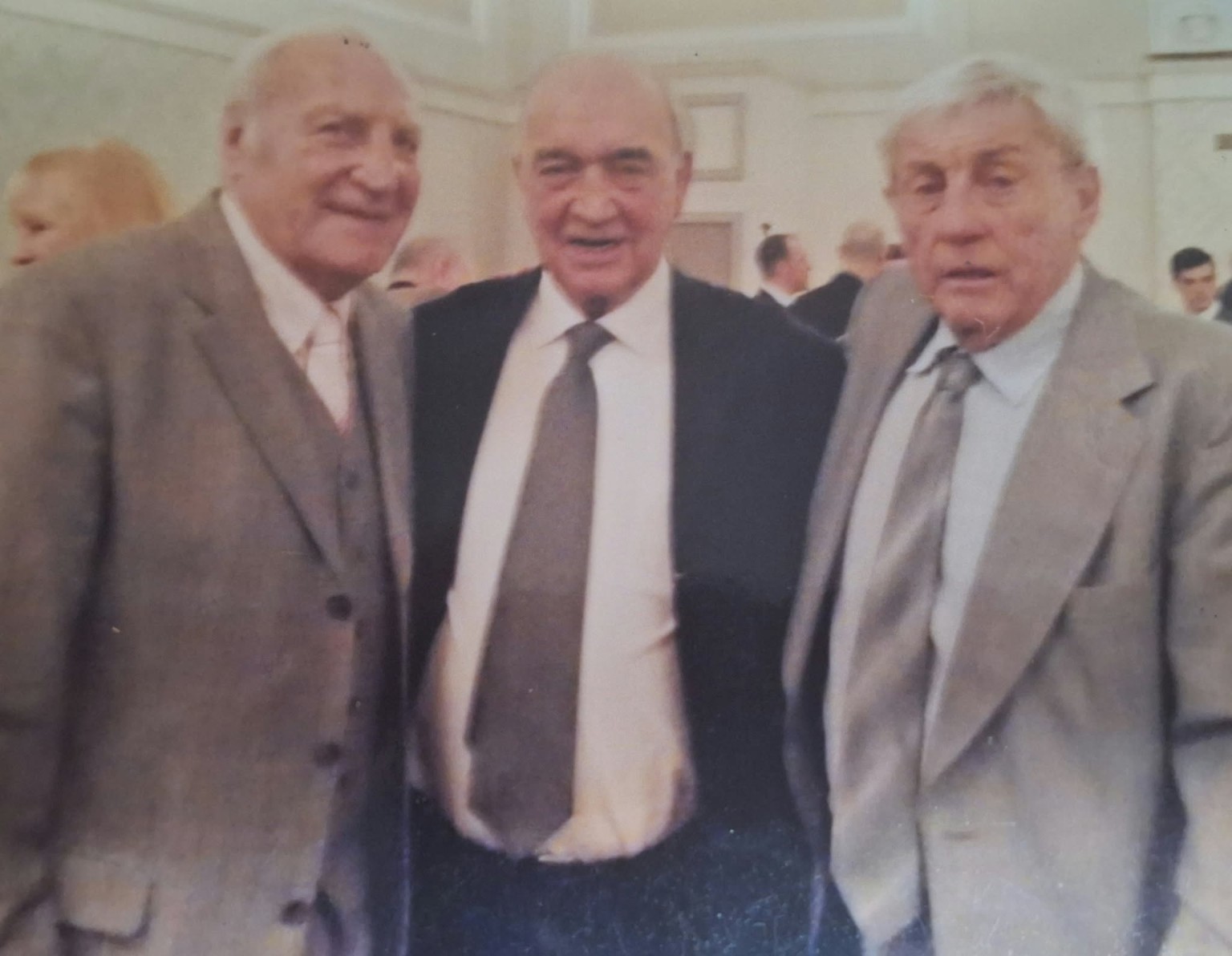
Another photograph in the family collection shows Mickey alongside Mark Lazarus, the former Queens Park Rangers footballer who scored the winning goal in the 1967 League Cup final. Richie remembers him as one of the Lazarus brothers. It is another small glimpse of the sporting company Mickey kept in later life.
Among the photographs Richie has preserved is one showing Mickey with Prince Rodney, Sylvester Mittie, James Cook and Colin McMillan.
It was one of Mickey's favourites.
Richie recalls that Mittie and Cook visited Mickey at home for his eightieth birthday.
Another photograph shows him with former heavyweight champion Tim Witherspoon.
There is also a picture Richie particularly treasures involving Sammy McCarthy and Joe Somerville, two names connected with the boxing world his grandfather knew so well.
The photographs are valuable for reasons beyond identifying the people in them.
They show the relationships that survived after the fighting stopped.
Mickey had spent much of his life in the company of boxers, and he remained part of that community as an older man.
The Sheffield archive also records another aspect of his later life: he played accordion and piano in Irish pubs around his local area.
It is a lovely detail, particularly when considered alongside his family's origins in County Kerry.
The boy who had taken up boxing partly because of the difficulties he experienced growing up Irish in England remained connected to Irish social life many decades later.
His boxing years had given him one community.
Music offered another.
The Stories That Remain
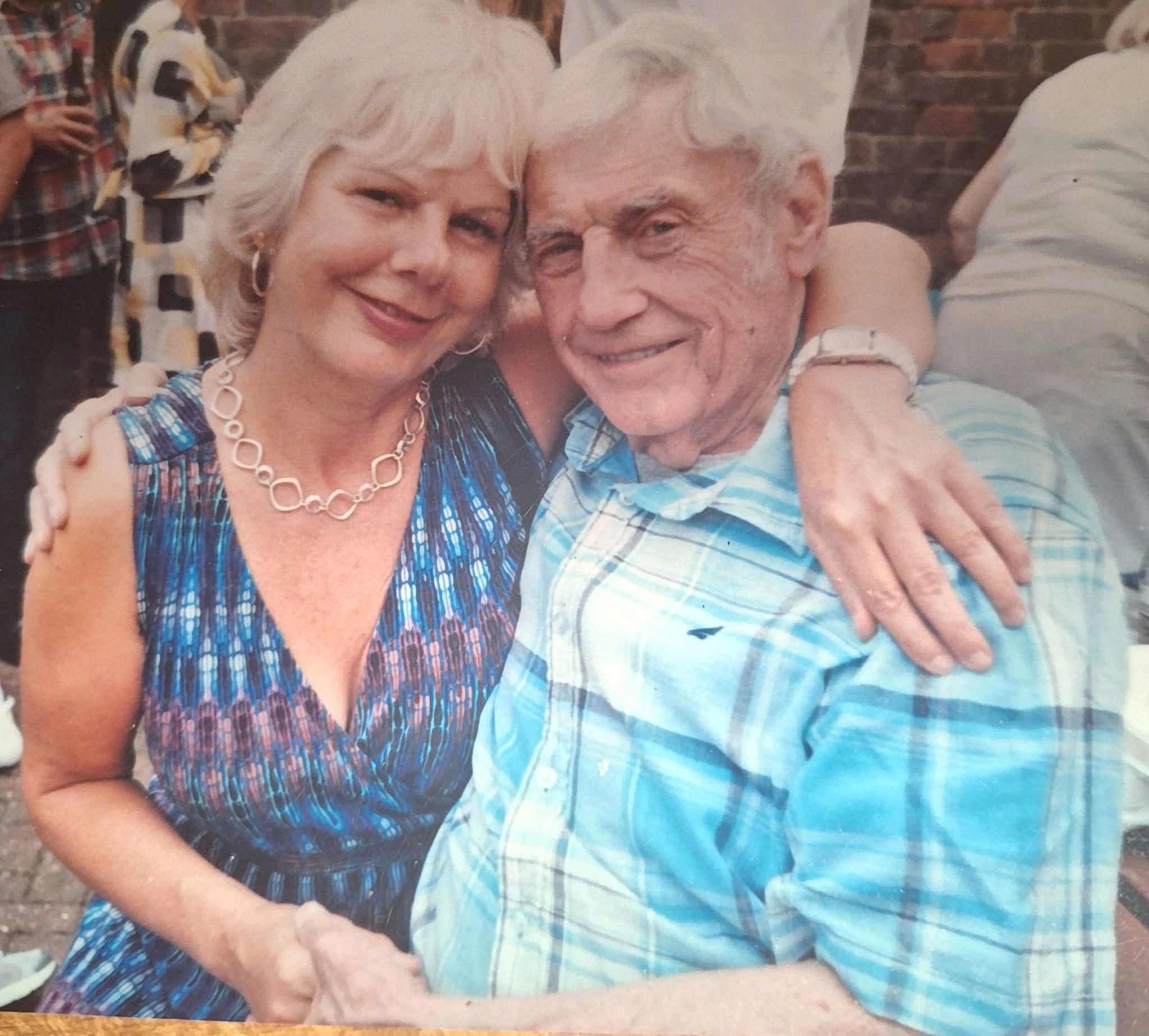
Mickey Hayes died in London on 14 January 2023, leaving behind a life that is difficult to summarise through conventional boxing statistics.
The archive's estimate of 4,500 contests is extraordinary, but the figure alone tells us very little about the man.
It does not explain why he found Joe Somerville so amusing, why Billy Dean remained his answer when asked about the hardest puncher he had faced, or why the names of his first three opponents were still important to him more than seventy years later.
For those details, we are fortunate that Richie listened.
His memories also provide a useful reminder of how much boxing history exists beyond the official record.
The travelling booths produced fighters, entertained communities and gave working men opportunities to earn money through skills they had developed over many years.
They also created friendships, rivalries and experiences that were rarely recorded in the newspapers.
By the late twentieth century, the booths had largely disappeared from British fairgrounds. The crowds moved on to other forms of entertainment, regulations changed, and a tradition that had survived for generations gradually came to an end.
Much of what remains is held in archives, private collections and family memories.
That is why Richie's efforts matter.
He has preserved photographs, listened to his grandfather's stories and taken the time to share them with somebody willing to record them.
There is no great mystery to why I find that worthwhile.
I have spent a considerable amount of time researching fighters whose names have largely disappeared from public memory.
Sometimes there are newspaper reports and official records to work from. Sometimes there is little more than a photograph, a family recollection or a name mentioned by somebody who was there.
The challenge is to bring those pieces together without losing sight of the people behind them.
Mickey Hayes left us an unusually rich collection of memories.
A young Irish boy who learned to defend himself. A seventeen-year-old who won three consecutive challenges and found himself invited into the travelling booths. A fighter who spent more than twenty years sharing rings with some of the most experienced men in the business.
And, later, a grandfather who was happiest talking about the people he had known.
Towards the end of his life, Richie asked him about those first three fights.
Mickey remembered.
More than seventy years had passed, but the names were still there.
I think that tells us rather more about what boxing meant to Mickey Hayes than the number 4,500 ever could.
With sincere thanks to Richie Hughes for sharing his grandfather's memories, family photographs and research.
Historical research: National Fairground and Circus Archive, University of Sheffield.
Murphy Boxing Books — Boxing History, Judged by the Evidence.