
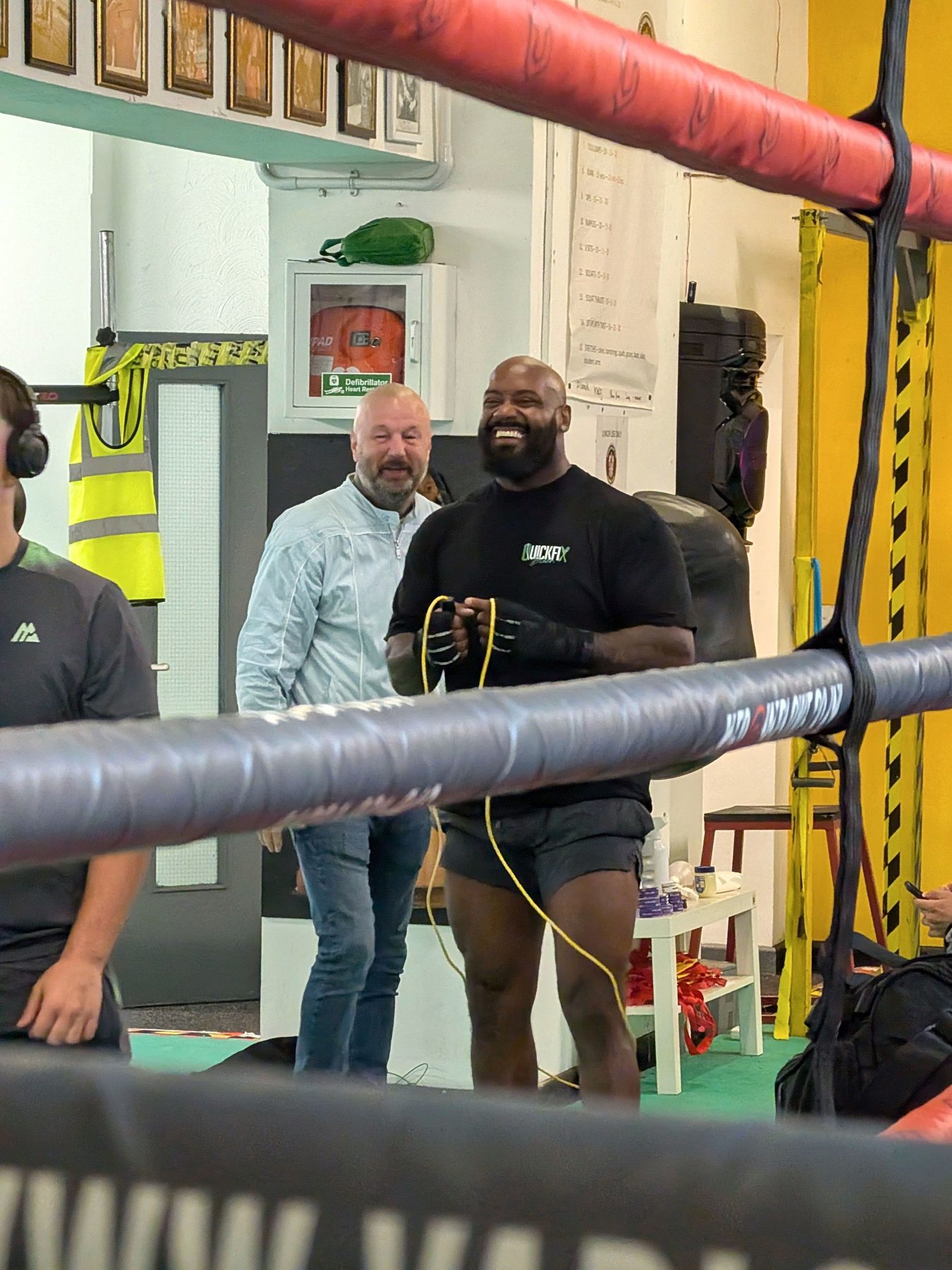
There are boxing clubs whose history is preserved in photographs and old programmes. Then there are those where the history is still being made, three minutes at a time. Wolverhampton Amateur Boxing Club belongs to the second kind.
The building needs care, the equipment takes punishment, and the bills do not stop arriving simply because a club serves its community. Yet when I visited, the gym was busy. Young boxers worked through their rounds while Richie Carter spoke about the people who had brought the club this far, and those who might carry it forward.
The story is bigger than any one coach or champion. It stretches back through different premises, changing committees and generations of fighters. Some names survived in boxing records; others endured because somebody took the trouble to remember them.
A boy at the gym door
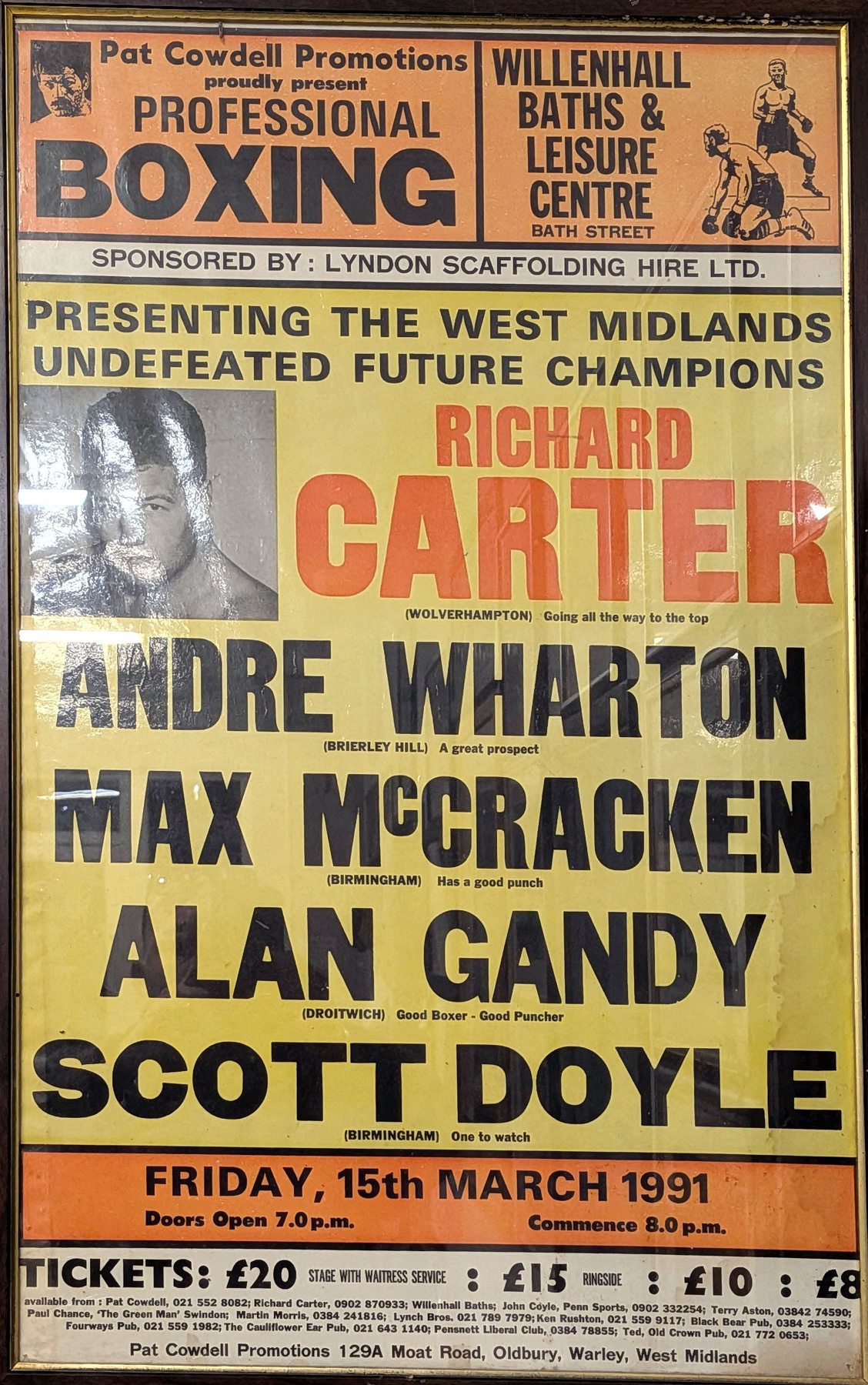
Carter remembers watching the bags swing at Bilston Golden Gloves, near his primary school. He helped sweep the gym and looked in through the open doors until his father eventually took him along. He began boxing at ten and had his first contest at eleven.
In 1984 he reached the national schoolboy final, and in 1987 won a junior ABA title. He attended regular England training courses before turning professional at eighteen.
What he carried into coaching was not only the experience of contests, but an understanding of what it feels like to be the youngster waiting for the bell.
Before the present generation
Former secretary John “Thomo” Thomas recalled the club beginning in May 1936. George Griffiths, in his booklet The Early Years, placed founder Harry Dallard’s efforts in 1937. The accounts differ. A surviving programme reproduced by Griffiths establishes that Wolverhampton ABC was operating by November 1938, but the exact foundation year remains an open question.
Griffiths described Dallard, a coal and coke merchant from Whitmore Reans, gathering a committee and pursuing affiliation. The club moved through the disruption of war and through a succession of premises, including St George’s Hall, the Rose and Crown in Blakenhall and Montrose Street. The November 1938 programme advertises a show against Dudley ABC at Goldthorn Social Club.
Each address represents more than a change of room. Somebody had to arrange the contests, find a trainer, open the doors and keep the accounts. A champion’s name might survive in a record book; the people who made his contests possible are less likely to be remembered.
The people who carried the history
Bobby Blower and Bingo Crookes are among the names preserved in Griffiths’s account. Blower’s achievements and his contests against fighters who later became prominent professionals deserve fuller examination of contemporary results, rather than repetition of every remembered claim as settled fact.
George Griffiths himself was part of the club’s story: a boxer who became a coach, referee, judge and matchmaker, and who took the time to record the earlier generations. John Thomas, too, helped preserve that history. Passing on knowledge is another kind of service to a boxing club.
The fighters who followed
The club’s story can also be traced through the boxers who came through its doors. Tony Wilson represented Great Britain at the 1984 Los Angeles Olympics, reached the light-heavyweight quarter-finals and won senior ABA light-heavyweight titles in 1983 and 1984. He later held the British professional light-heavyweight championship.
Other generations carried that tradition forward. Jermaine Osbourne-Edwards, known in the ring as “The Kundalini King”, became Midlands Area super-lightweight champion. Lewis Morris twice challenged for Midlands honours, while Ryan Cotterell won national titles representing the club in 2017 and 2018. Different careers, different eras, but the same gym at the heart of their beginnings.
Taking on the responsibility
Richie had known the club long before returning to coach. After running Carter’s Gym in Bushbury, he arrived roughly a decade ago to find Wolverhampton ABC in need of renewed momentum. But he is clear that the work is shared. Gary Bate manages the day-to-day running of the club and its finances, while Nick Griffiths serves as a trustee. Richie’s wife Jane helps with registrations and administration, making training nights possible.
The job is not only to teach someone how to box. It is to keep the place running, give people a reason to return, and help them discover what they can do with the opportunity.
Four fighters, four stories still unfolding
Four of the fighters I met and photographed were Gully Powar, Marcus Portman, Callum Harvey and Ollie Cooper. A story about the club’s past must make room for those shaping its present.
Gully Powar — a British title challenge
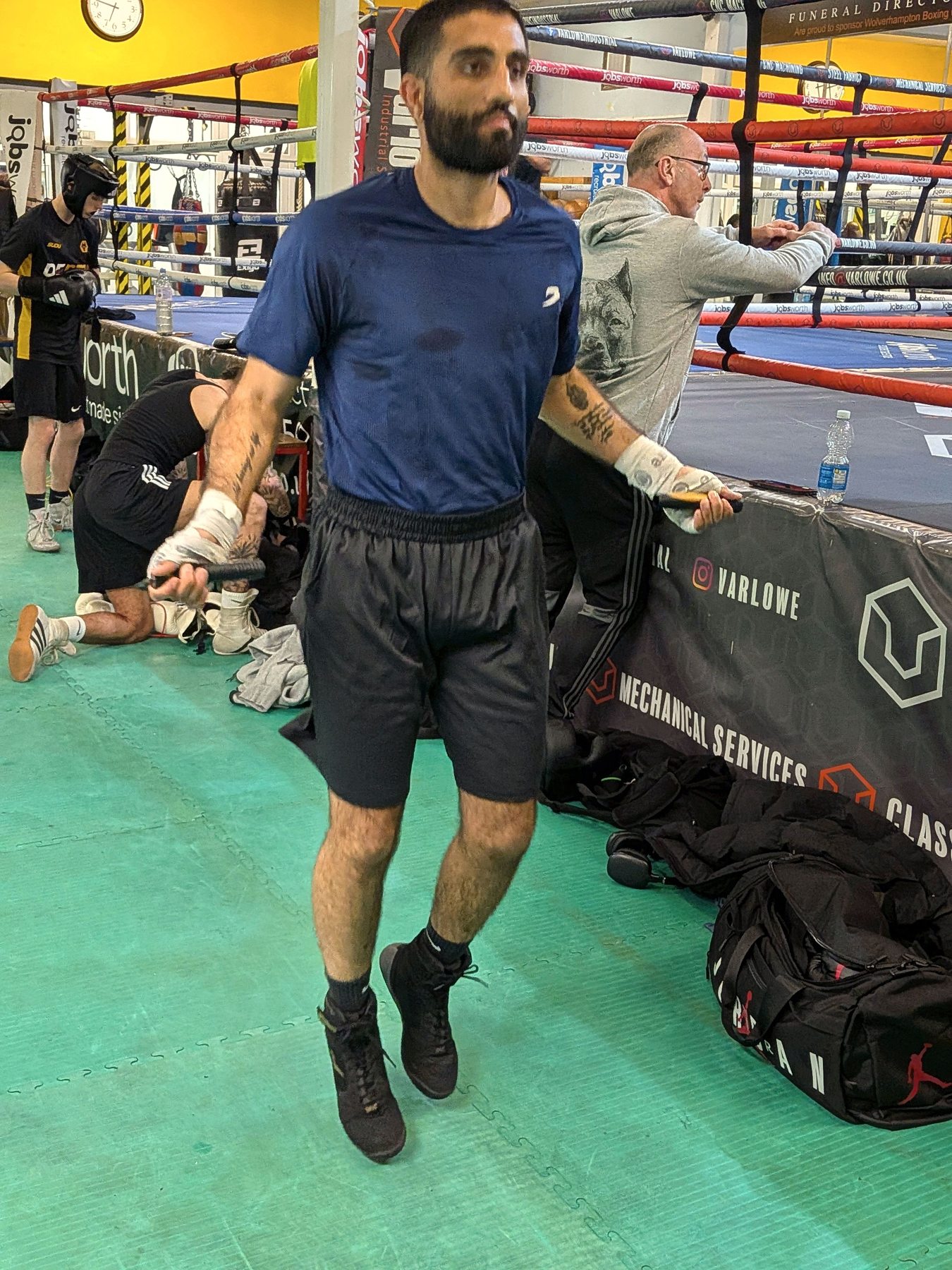
On 4 April 2026 in Cardiff, Powar challenged Rhys Edwards for the vacant British featherweight title. Twelve rounds ended in a majority draw. It was not the result Powar wanted, but it placed him firmly in the British championship picture. He subsequently called for a rematch.
Carter spoke during our visit about the possibility of another important opportunity in November. Whatever comes next, Powar’s British title challenge already tells us plenty about the level he has reached.
Marcus Portman — a moment of perspective
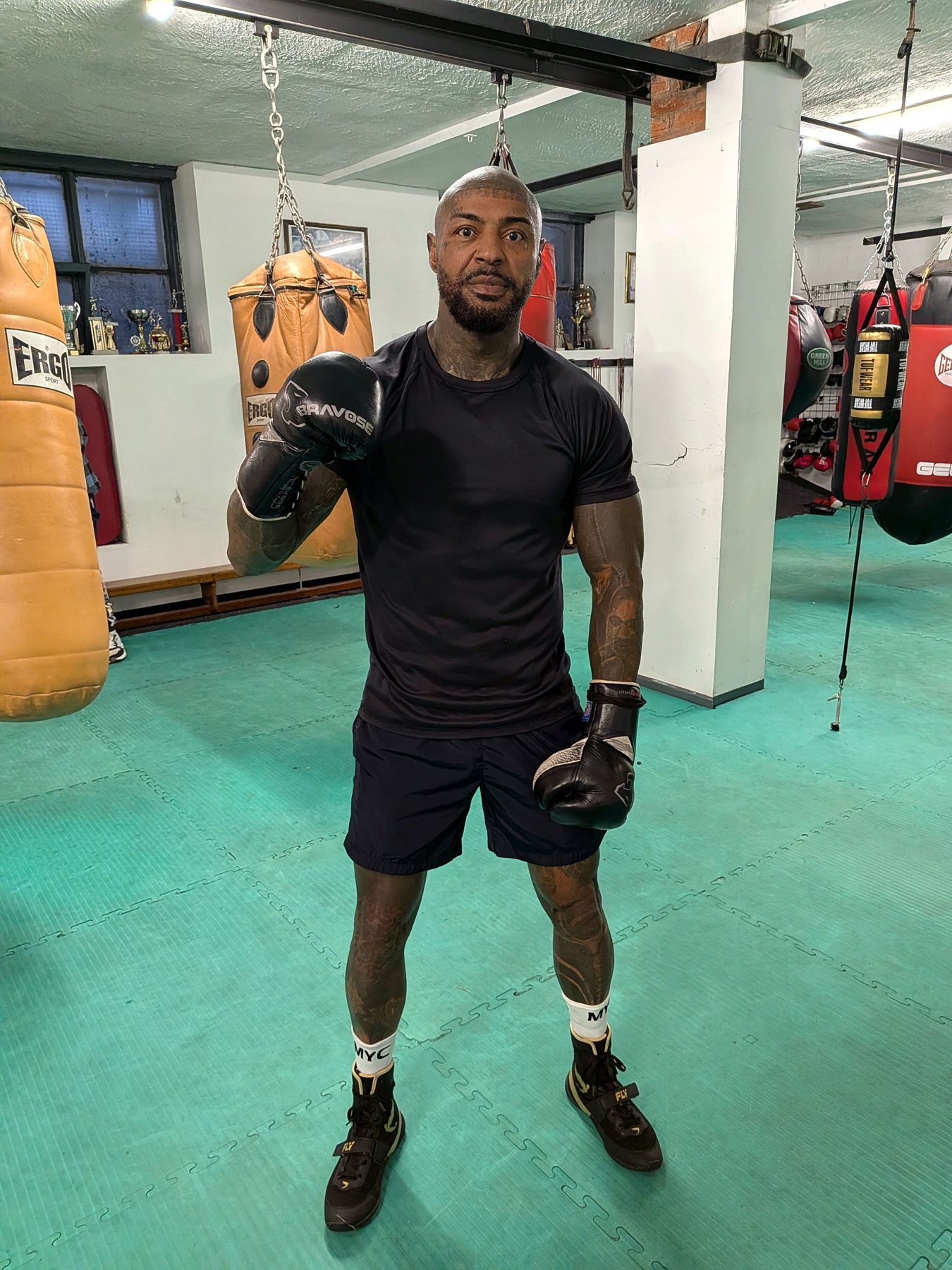
On 26 September 2026, Portman faced James “Chunky” DeGale at the Civic Hall, Wolverhampton, on ShowFighter’s REIGN event. The contest was scheduled for six rounds, but ended in the fourth after an accidental clash of heads. DeGale was awarded the decision on the scorecards. It was a crossover event rather than a British Boxing Board of Control-sanctioned professional contest; that distinction matters when describing the result.
I spoke with Marcus afterwards at the gym. He initially played down the occasion. I pointed out exactly who he had faced: an Olympic gold medallist and former two-time world champion. That brought a grin and a brief acknowledgement: “Yeah, I pushed him, man.”
It was a small exchange, but a revealing one. Portman had shared the ring with one of Britain’s most accomplished fighters and seemed more interested in what came next than in making a fuss about it.
Callum Harvey — recognition earned in the amateurs
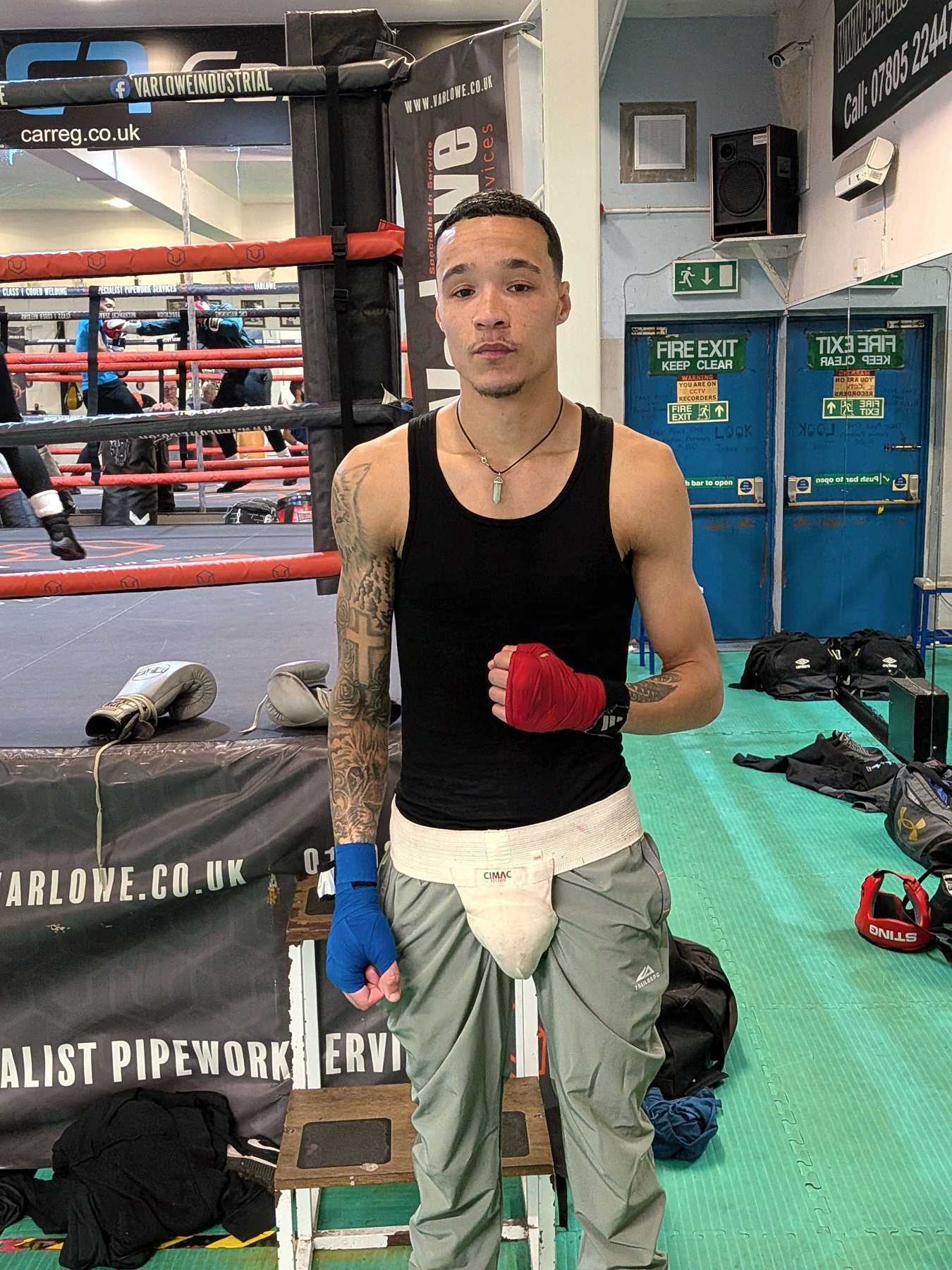
Callum Harvey is a senior amateur whom Carter specifically wanted recognised. His amateur progress has earned recognition in the Midlands, and Carter was keen that his work should not go unnoticed.
That is not a reason to reduce him to a name beneath a photograph. It is a reason to tell his story properly: what he has already achieved, the work behind it and where he hopes to go next. There is clearly a fuller conversation to be had.
Ollie Cooper — an English champion
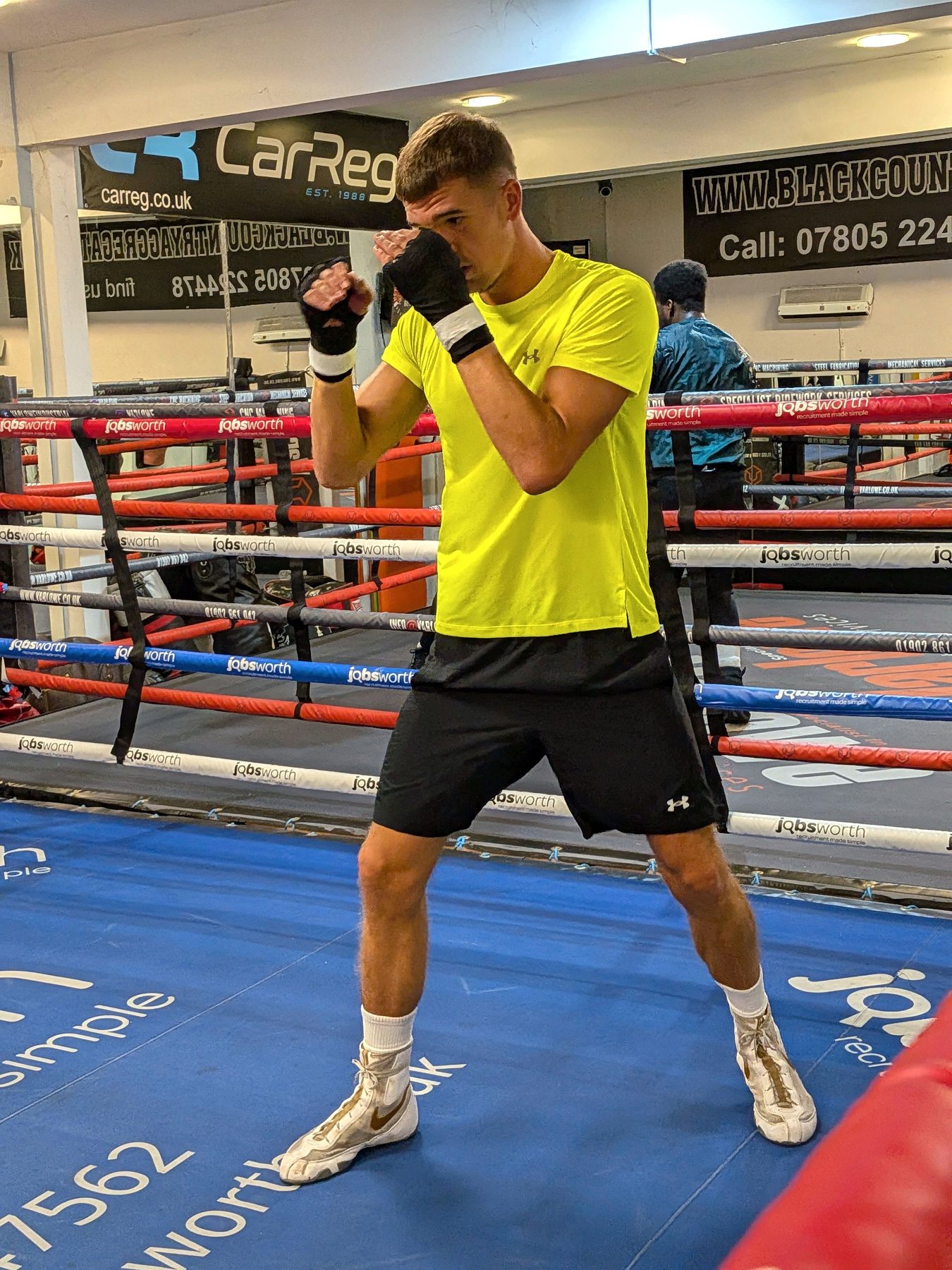
The Cannock southpaw has already built a substantial professional record. He won the Midlands Area super-middleweight title against Liam O’Hare in November 2024, then defended it against Tom Ramsden in September 2025.
At York Hall on 29 May 2026, Cooper stopped James Osborne in the eighth round to win the vacant English super-middleweight championship, improving his record to 13 wins from 13 contests, with three stoppage victories. Cooper is the current English super-middleweight champion.
A championship is not a promise of the next one. It is evidence that Cooper has earned the chance to pursue greater opportunities. His progress, like Powar’s, shows what Carter and the gym are producing in the present, not merely what the club achieved in the past.
Four fighters, four different journeys. None needs to be inflated to make the point. Wolverhampton ABC’s history is still being written.
More than the boxing
Boxing does not solve every difficulty in a young person’s life. A club can, however, offer a routine, trusted adults and the chance to be judged by effort rather than reputation. Most members will never become champions. That does not make their time here less worthwhile.
Keeping the doors open
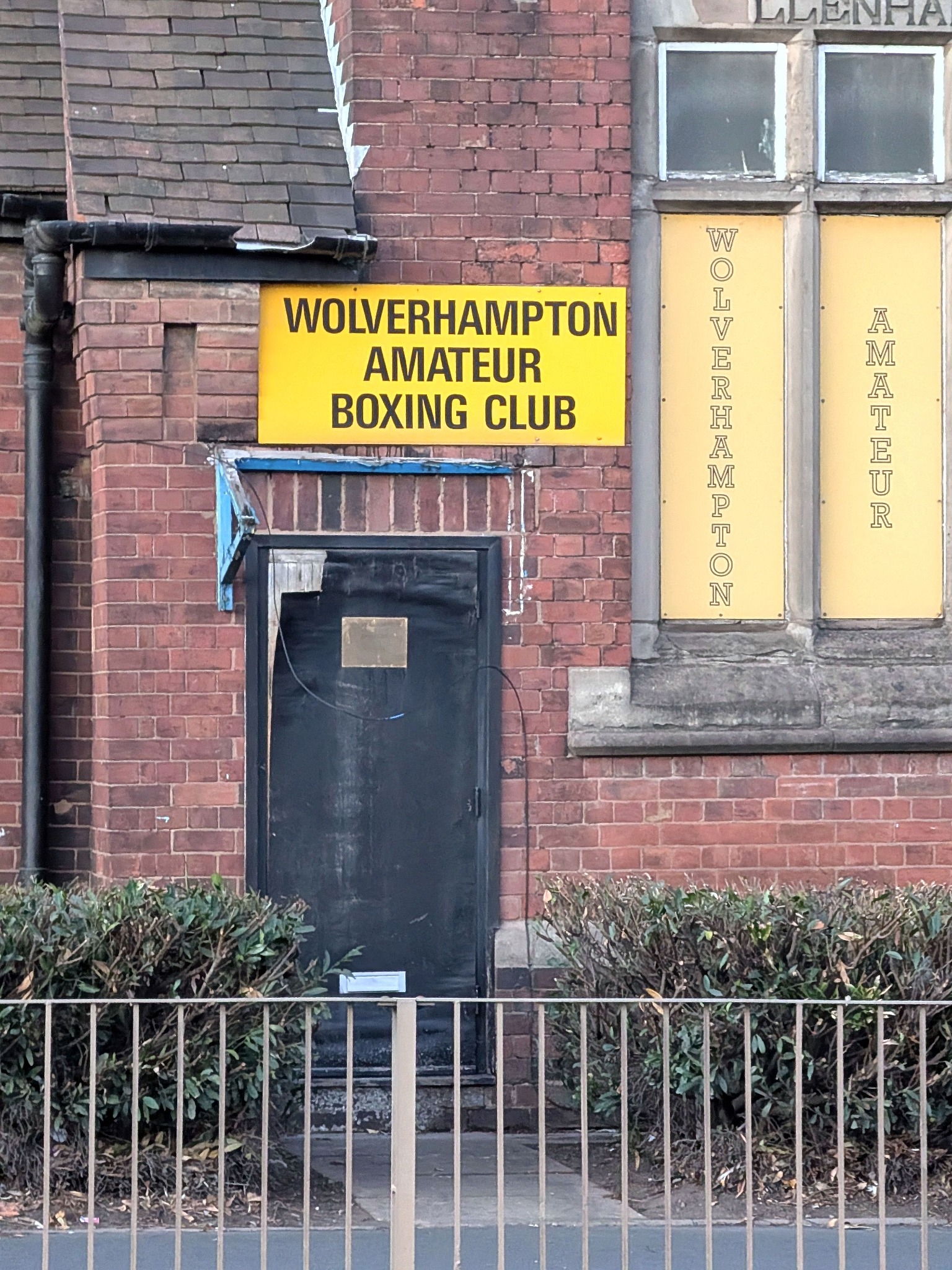
Maintaining an old building is expensive. Equipment wears out, repairs cannot always wait and raising funds is a continuing task. Carter spoke appreciatively of local supporters who have helped with the facilities and repairs, as well as charitable assistance. It is the sort of work without which the contests and championships could not happen.
Behind every ordinary training night is the less visible labour of people raising money, completing paperwork, making repairs and turning up again. That effort rarely attracts applause. It remains part of every contest the club makes possible.
The next ten years
Carter would like to see the club reach its centenary, and he hopes to stay involved for as long as he can. He also sees a possible future role for his son Joe, who has boxed and learned the coaching side of the sport alongside him. The next decade will bring changes, but preparing others to carry the responsibility is itself a kind of continuity.
If the walls could talk
Towards the end of our conversation I asked Richie what the walls might say if they could tell their own story. He spoke of tears and emotion, of people who had struggled and others who had felt on top of the world. Then he laughed at the thought of all those stories together: “If these walls could talk, mate, you’d have a bestseller.”
The walls would remember the champions, certainly. But they would also remember the youngster walking into a gym for the first time, the boxer returning after defeat, the volunteer unlocking the doors and the coach staying behind after everyone else had gone.
The names change. The buildings change. Boxing itself changes. What remains is the need for somewhere a young person can walk through the door and begin.
At Wolverhampton Amateur Boxing Club, that door is still open. And the work continues.
Reporting and photographs: Murphy Boxing Books. Historical background informed by George Griffiths’s account of the club and John Thomas’s recollections. The precise founding year remains under investigation.
Research acknowledgement
With thanks to the Central (Midlands) Ex-Boxers Association (CEBA) and Paul Nutting for their assistance and historical research material relating to Wolverhampton Amateur Boxing Club. Their contribution helped bring the club’s earlier fighters, coaches and volunteers into view. This acknowledgement does not imply CEBA’s endorsement of the article.